Downsize My Home
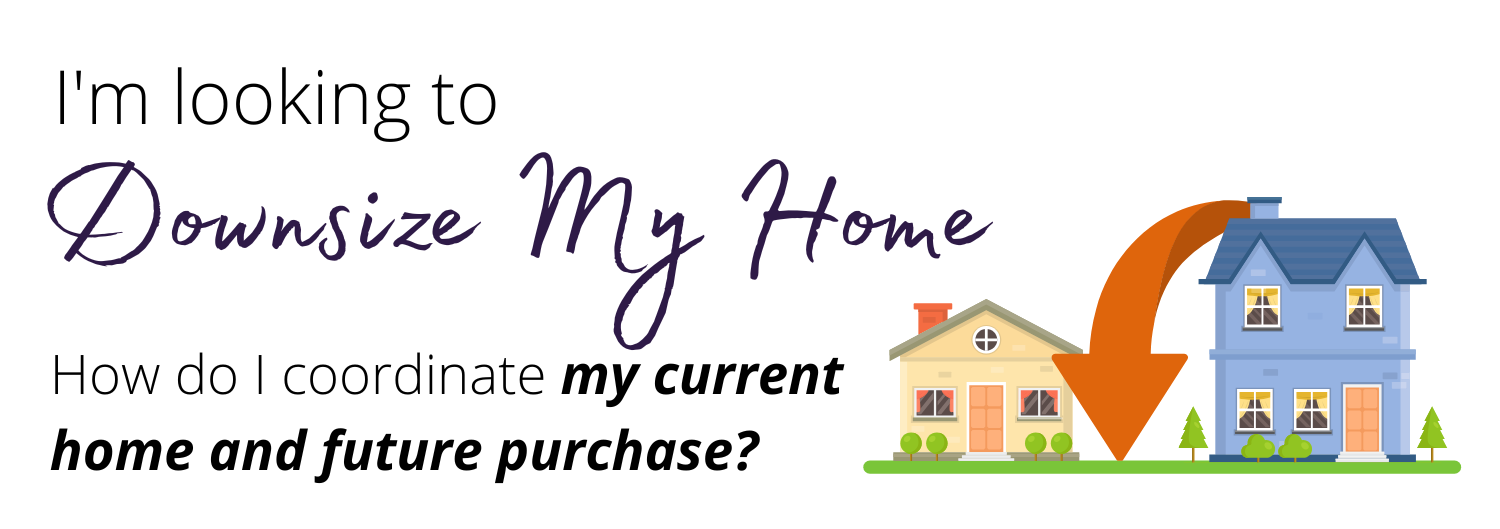
I'm looking to
Downsize My Home
How do I coordinate
my current home and future purchase?
DOWNSIZING IS MORE THAN SQ.FT.
Downsizing isn’t always about moving to a smaller home. In many cases, the strategy behind the move is just as important as the decision itself. It can also be a solution for:
- Reducing monthly expenses
- Eliminating or lowering mortgage payments
- Accessing equity for retirement
- Moving closer to family or amenities
- Reducing maintenance and upkeep
PREPARING TO DOWNSIZE
Taking a few small steps early can make the transition smoother and help ensure the process feels more organized, thoughtful, and aligned with your long-term plans.
Clarify your long-term lifestyle goals
- Think about what you want the next stage of life to look like - less maintenance, a smaller home, closer proximity to family, or easier access to amenities and healthcare.
Understand the equity in your current home
- Your home may be your largest asset. Knowing its approximate value, remaining mortgage balance and upcoming maturity date can help determine when and what options may be available.
Begin decluttering early
- Downsizing often means moving into a smaller space. Sorting belongings gradually can make the eventual move much less overwhelming.
Talk with family and trusted advisors
- Discuss your plans with family members, financial advisors, or professionals involved in the process so everyone can be aligned with your goals.
Give yourself time to explore options
- Starting the conversation early allows you to evaluate housing choices, financial strategies, and timing without feeling rushed.
SELLING HOME NOW
If you plan to sell your current home and source your down payment for your new purchase from the sale proceeds, there are a couple of scenarios you may encounter:
If the dates DO line up...
This is the ideal scenario for most, where your sale closes before or on the same day as the closing date for your purchase, so your sale proceeds being used for down payment will simply be handled by your lawyer or notary.
Keep in mind, if you are porting your mortgage from your current home to the new property, your lender may have certain date restrictions (i.e. your sale cannot close more than 30 days before your purchase).
If the dates DON’T line up...
If you have a firm sale agreement (subject-free) on your current home, but it is closing after your purchase, bridge/interim financing may be an option. More info can be found on our “Bridge Financing” info sheet.
SELLING HOME LATER
One of the primary considerations in this scenario is where your down payment will be sourced from.
Depending on when you are planning to sell, we can look at different strategies that may be available, including:
- Accessing Equity
- Home Equity Line of Credit (HELOC)
- Interim Private Financing
- Payment-Optional/Reverse Mortgage
It is important to note, these strategies can provide flexibility, but they typically require sufficient equity and may have additional qualification requirements.
PAYMENT-OPTIONAL MORTGAGES
For homeowners 55+, a payment-optional mortgage (also known as a reverse mortgage) may be another strategy to consider for accessing equity from your current home before it has sold.
As a short-term financing solution, open terms are available, allowing you to pay out or reduce your mortgage balance without penalty when your current home eventually sells.
Not only does a payment-optional mortgage provide flexibility while you transition between properties, but you could also choose to set up a long-term solution (without having to incur new legal fees). To learn more about how a payment-optional mortgage works when used as a long-term solution, see our ‘Payment-Optional Mortgage’ info sheet.
QUALIFICATION REQUIREMENTS
Even when downsizing, qualification is still required, but will vary depending on your income/net worth, and strategy.
For a traditional mortgage, lenders typically look at:
- Your income (such as employment, pensions, or investments)
- Any existing debts or monthly payments
- Your credit history
- Details for the home you want to purchase
If you plan to purchase before selling your current home, lenders may also need to confirm that you can temporarily carry both properties.
For a payment-optional/reverse mortgage, income is not considered. Instead, lenders typically look at:
- Age of the borrowers
- Home value and available equity
- Property location and type
Reach out to see if you can qualify!
FREQUENTLY ASKED QUESTIONS
Can I still defer my property taxes?
Outstanding property taxes will need to be settled going in to the new mortgage. After the new mortgage starts, you can start deferring property taxes again.
Do I have to end up with a mortgage?
Not necessarily. We can look at interim/short-term strategies that won’t leave you with a “long-term” mortgage.
How much are closing costs?
Closing costs will depend on the exact financing solution, and whether or not you have to pay a mortgage penalty if breaking your current term early. Once we have an idea on the solution, we can give you a better estimate.
What if I don’t want to sell, but need access to funds?
We can definitely look at different strategies to access the equity in your current home so that you can avoid selling.
ADDITIONAL CONSIDERATIONS
Consult your REALTOR®
- If you need a recommendation, we have REALTOR® partners who specialize in this scenario.
Consult your accountant and lawyer
- Ensure you are aware of any potential tax and legal implications.
Closing costs
- Keep in mind the closing costs for your purchase, including Property Transfer Tax (more information HERE) and the costs associated with selling your home.
Mortgage penalties
- Please note, if breaking mortgage mid-term, a prepayment penalty may be applicable.
Estate planning
- Changes to your home ownership or mortgage structure may impact your estate plan.
DOWNSIZING IS MORE THAN SQUARE FEET
Downsizing isn’t always about moving to a smaller home. In many cases, the strategy behind the move is just as important as the decision itself. It can also be a solution for:
- Reducing monthly expenses
- Eliminating or lowering mortgage payments
- Accessing equity for retirement
- Moving closer to family or amenities
- Reducing maintenance and upkeep
PREPARING TO DOWNSIZE
Taking a few small steps early can make the transition smoother and help ensure the process feels more organized, thoughtful, and aligned with your long-term plans.
- Clarify your long-term lifestyle goals
- Think about what you want the next stage of life to look like - less maintenance, a smaller home, closer proximity to family, or easier access to amenities and healthcare.
- Understand the equity in your current home
- Your home may be your largest asset. Knowing its approximate value, remaining mortgage balance and upcoming maturity date can help determine when and what options may be available.
- Begin decluttering early
- Downsizing often means moving into a smaller space. Sorting belongings gradually can make the eventual move much less overwhelming.
- Talk with family and trusted advisors
- Discuss your plans with family members, financial advisors, or professionals involved in the process so everyone can be aligned with your goals.
- Give yourself time to explore options
- Starting the conversation early allows you to evaluate housing choices, financial strategies, and timing without feeling rushed.
SELLING HOME NOW
If you plan to sell your current home and source your down payment for your new purchase from the sale proceeds, there are a couple of scenarios you may encounter:
If the dates DO line up...
This is the ideal scenario for most, where your sale closes before or on the same day as the closing date for your purchase, so your sale proceeds being used for down payment will simply be handled by your lawyer or notary.
Keep in mind, if you are porting your mortgage from your current home to the new property, your lender may have certain date restrictions (i.e. your sale cannot close more than 30 days before your purchase).
If the dates DON’T line up...
If you have a firm sale agreement (subject-free) on your current home, but it is closing after your purchase, bridge/interim financing may be an option. More info can be found on our “Bridge Financing” info sheet.
SELLING HOME LATER
One of the primary considerations in this scenario is where your down payment will be sourced from.
Depending on when you are planning to sell and if you need a mortgage in the end, we can look at different strategies that may be available, including:
- Accessing Equity
- Home Equity Line of Credit (HELOC)
- Interim Private Financing
- Payment-Optional/Reverse Mortgage
It is important to note, these strategies can provide flexibility, but they typically require sufficient equity and may have additional qualification requirements.
PAYMENT-OPTIONAL MORTGAGES
For homeowners 55+, a payment-optional mortgage (also known as a reverse mortgage) may be another strategy to consider for accessing equity from your current home before it has sold.
As a short-term financing solution, open terms are available, allowing you to pay out or reduce your mortgage balance without penalty when your current home eventually sells.
Not only does a payment-optional mortgage provide flexibility while you transition between properties, but you could also choose to set up a long-term solution (without having to incur new legal fees). To learn more about how a payment-optional mortgage works when used as a long-term solution, see our
‘Payment-Optional Mortgage’ info sheet.
FREQUENTLY ASKED QUESTIONS
Can I still defer my property taxes?
Outstanding property taxes will need to be settled going in to the new mortgage. After the new mortgage starts, you can start deferring property taxes again.
Do I have to end up with a mortgage?
Not necessarily. We can look at interim/short-term strategies that won’t leave you with a “long-term” mortgage.
How much are closing costs?
Closing costs will depend on the exact financing solution, and whether or not you have to pay a mortgage penalty if breaking your current term early. Once we have an idea on the solution, we can give you a better estimate.
What if I don’t want to sell, but need access to funds?
We can definitely look at different strategies to access the equity in your current home so that you can avoid selling.
QUALIFICATION REQUIREMENTS
Even when downsizing, qualification is still required, but will vary depending on your income/net worth, and strategy.
For a traditional mortgage, lenders typically look at:
- Your income (such as employment, pensions, or investments)
- Any existing debts or monthly payments
- Your credit history
- Details for the home you want to purchase
If you plan to purchase before selling your current home, lenders may also need to confirm that you can temporarily carry both properties.
For a payment-optional/reverse mortgage, income is not considered. Instead, lenders typically look at:
- Age of the borrowers
- Home value and available equity
- Property location and type
Reach out to see if you can qualify!
ADDITIONAL CONSIDERATIONS
- Consult your REALTOR®
- If you need a recommendation, we have REALTOR® partners who specialize in this scenario.
- Consult your accountant and lawyer
- Ensure you are aware of any potential tax and legal implications.
- Closing costs
- Keep in mind the closing costs for your purchase, including Property Transfer Tax (more information HERE) and the costs associated with selling your home.
- Mortgage penalties
- Please note, if breaking mortgage mid-term, a prepayment penalty may be applicable.
- Estate planning
- Changes to your home ownership or mortgage structure may impact your estate plan.